Silk or Satin for Your Wedding Dress
The difference between natural silk and satin in a wedding dress: drape, sheen, comfort in the heat and cost. And how to tell them apart in a store.

In a photo they look alike. In the hand they are nothing alike. And since most wedding dresses are now chosen on a screen, the confusion is understandable.
There is also a misconception that confuses the two even more: satin is not a fiber, it is a weave. A fabric can be silk satin, meaning both. But when people say “satin” in stores, they usually mean polyester satin, and that is where the differences begin.
How does it fall?
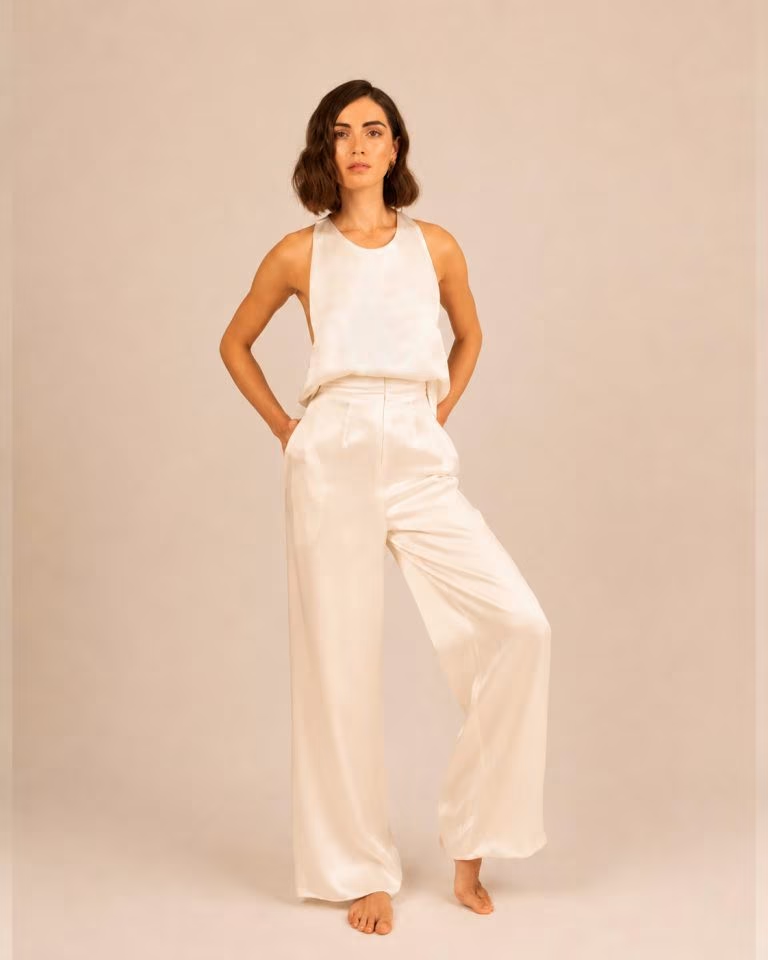
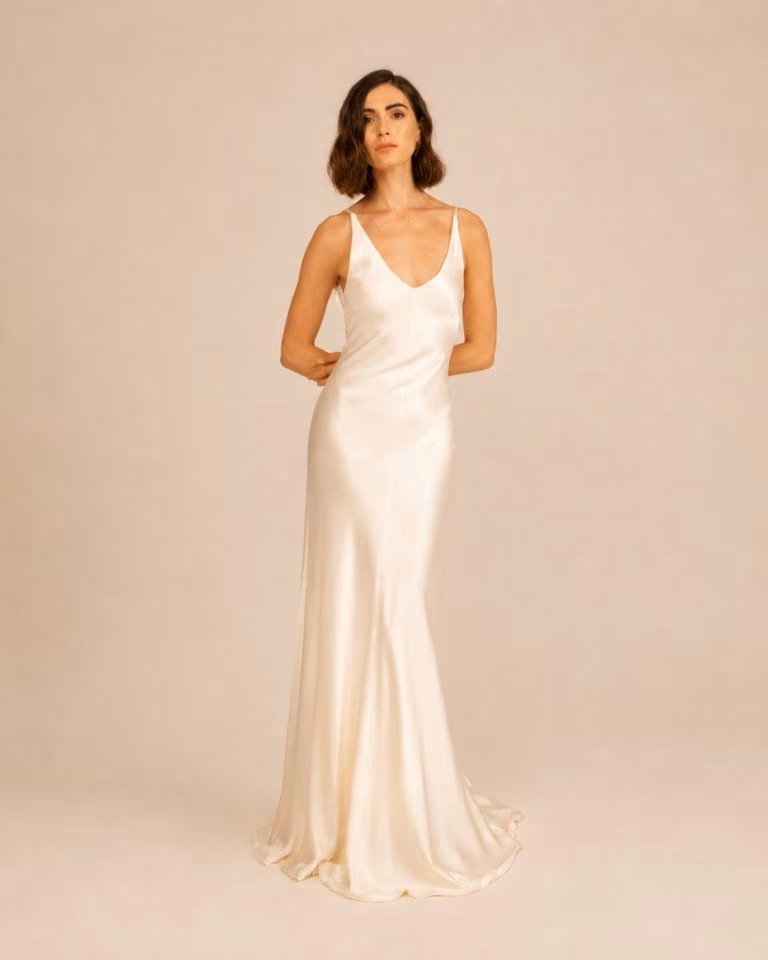
Natural silk has weight. It does not stand stiff or puff up, it follows the body and curves where it should. Polyester satin is lighter and “harder”: it tends to stand away from the body and form creases that do not flatter.
In a heavily decorated design this hardly shows. In a simple wedding dress it shows immediately, because there is nothing else for the eye to look at.
How does it shine?
The sheen of silk is uneven and changes with the angle, which is why it looks deep, almost liquid. The sheen of polyester is constant and uniform, and in strong light or with a flash it reads as shiny. That is the main reason some dresses look wonderful in person and cheap in the wedding photos.
How does it feel on you?
This is the biggest practical difference, and the one no photo shows.
Silk is a natural fiber: it breathes, absorbs moisture and adapts to body temperature. At a summer wedding it does not cling. Polyester satin does not breathe, it traps heat and moisture. At a July wedding, after two hours, the difference is not aesthetic, it is physical.
Where does satin win?
It is not a one-sided story.
Polyester satin costs significantly less. It creases less, which matters if the dress travels. It does not stain from water, while silk can mark from a single drop. And it is more resistant to the sun.
If the wedding is on an island and the dress travels in a suitcase, or if it has to survive rough conditions, satin is a sensible choice, not a compromise.
How to tell them apart in a store?
- Grab it and let go. Silk falls and unfolds slowly. Polyester springs back abruptly.
- Hold it in your hand for a while. Silk warms up and takes on your temperature. Polyester stays cool and then gets clammy.
- Turn it in the light. If the sheen changes with the angle, it is natural. If it stays the same, it is not.
- Check the label. “100% silk” versus “polyester”. “Satin” on its own means nothing.
And Greek silk
Silkworms have been raised in Soufli for centuries. We work only with silk from there , not out of local pride, but because we can see what we buy and check it before it is cut.
In a design without decoration, the fabric is the design.
See the collection or book an appointment to hold them in your hands. It is the only way to understand the difference.
From the collection
Pieces that go with this
Private appointment
Let us make it to your measurements
Leave your details and we will contact you to arrange an appointment at the atelier. No time limit and no obligation.
Further reading