
What Should I Wear to a Courthouse Wedding?
What to wear for a courthouse or city hall wedding: start with your own style, then what each length, colour and fabric offers, and when separates work.
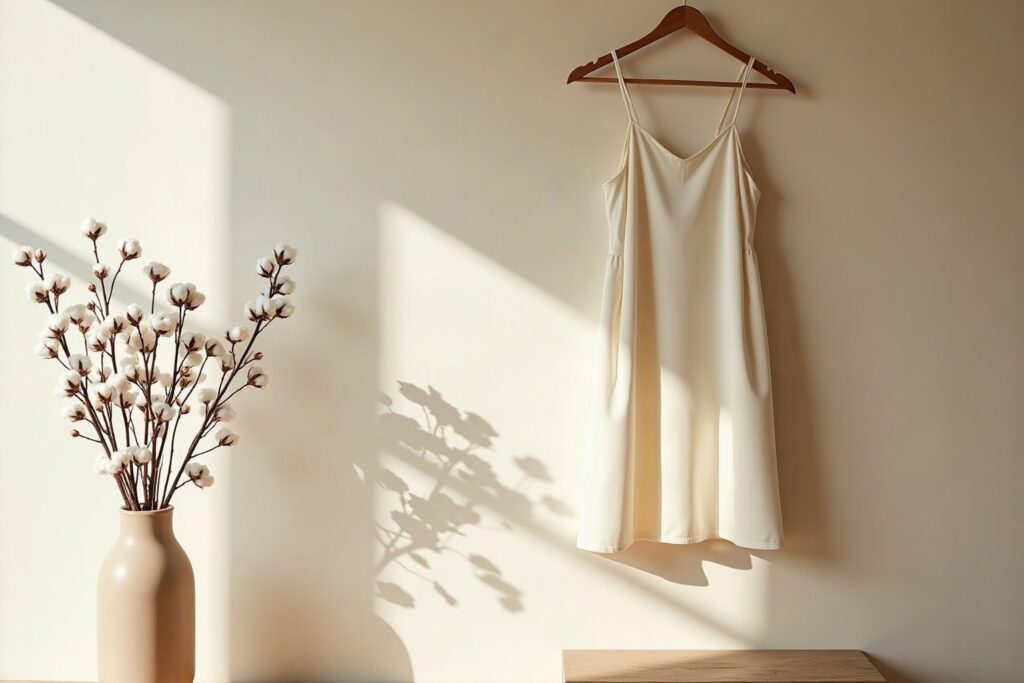
A civil wedding has one unwritten rule that confuses almost every bride: there is no rule. No dress code, no “must”, nothing that is off limits. And precisely because there is none, most brides get stuck.
This guide will not tell you what to wear. It will give you the criteria to decide for yourself.
Start with you, and the line that expresses you
The starting point is not the room or the hour. It is you: your personal style, the line that feels like yours and the way you want to feel on your wedding day. When a dress looks like you, the eye goes to you first, not to the room around you.
Once that is clear, the practical side of the day comes in: the venue, the time, the season, whether a lunch or a journey follows. These do not decide what you are allowed to wear. They help with the details, such as the weight of the fabric, a sleeve or a second design for later. A woman can choose a long or more formal wedding dress for a small courthouse ceremony if that is what expresses her.
One practical point worth keeping in mind is distance. A civil ceremony is short, the guests are few and they stand close to you. From a metre or two everything shows: the fabric, the seams, the way the dress falls. That is why the quality of the making matters in every choice that follows.
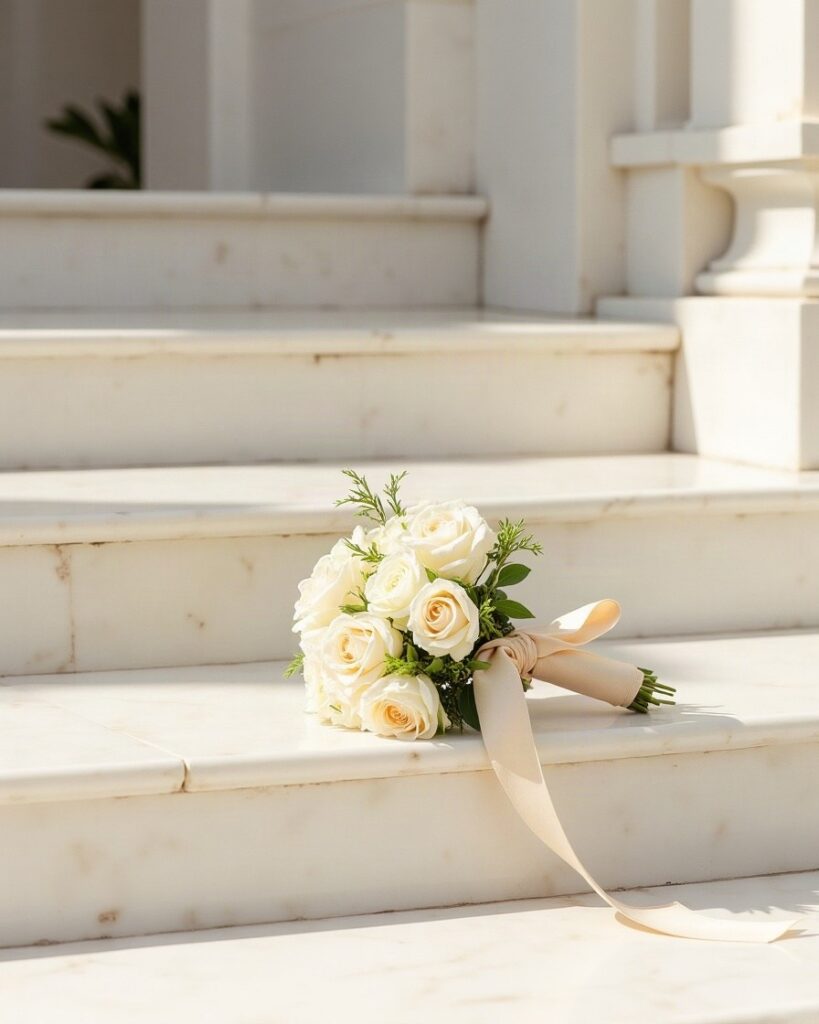
A length that feels like you
Every length has its own possibilities, and none of them is right for every bride.
A short dress feels fresh and light and leaves you free to move. It is practical if the ceremony is followed by a journey or a day in the city.
A midi balances formality and ease. It shows the ankle and the shoes and moves easily from the ceremony to the table.
A long dress has a more ceremonial presence and lets the fabric move along its full length. It can stand at a large reception or at a small ceremony, if that is what you want.
Guests are rarely more than a few metres away, so the hem, the way the fabric breaks at the ankle and the shoes all show. A line can be cut shorter or longer without losing its character, so it often helps to choose the line first. What matters most is finding the length that flatters you and expresses you best.
Colour and shade
Although tradition suggests pure white, modern bridal fashion is choosing ivory / ecru. Ivory is in fact the natural, untreated colour of silk, which gives it an authentic, refined luxury.
- It flatters every skin tone: Ivory has warm undertones. Unlike bright white, which can make fair skin look pale, ivory adds a gentle warmth and brightness to the face.
- It brings out the details of the dress: In pure white, the details of a wedding dress are often “lost” in the strong reflection of light, while ivory helps them stand out.
- It photographs better: Bright white can “blind” the camera (overexposure) and look too bright or turn bluish under some lights. Ivory photographs beautifully, with a soft, luxurious and natural tone.
- It gives a vintage, romantic feel: It offers a timeless elegance that recalls old-school glamour and romance, and makes the dress look more precious and considered.
- It pairs easily with jewellery: It works beautifully with gold jewellery, which brings out its warmth, as well as with rose gold or timeless pearls.
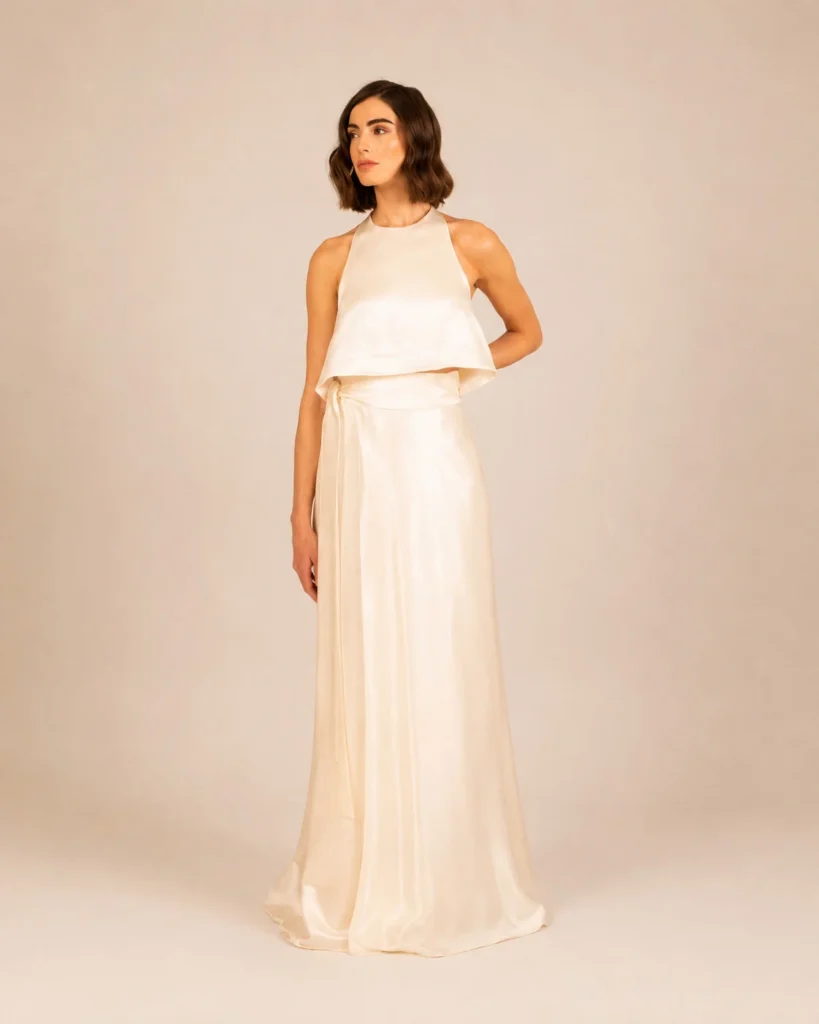
FROM THE COLLECTION
VIEW THE COLLECTION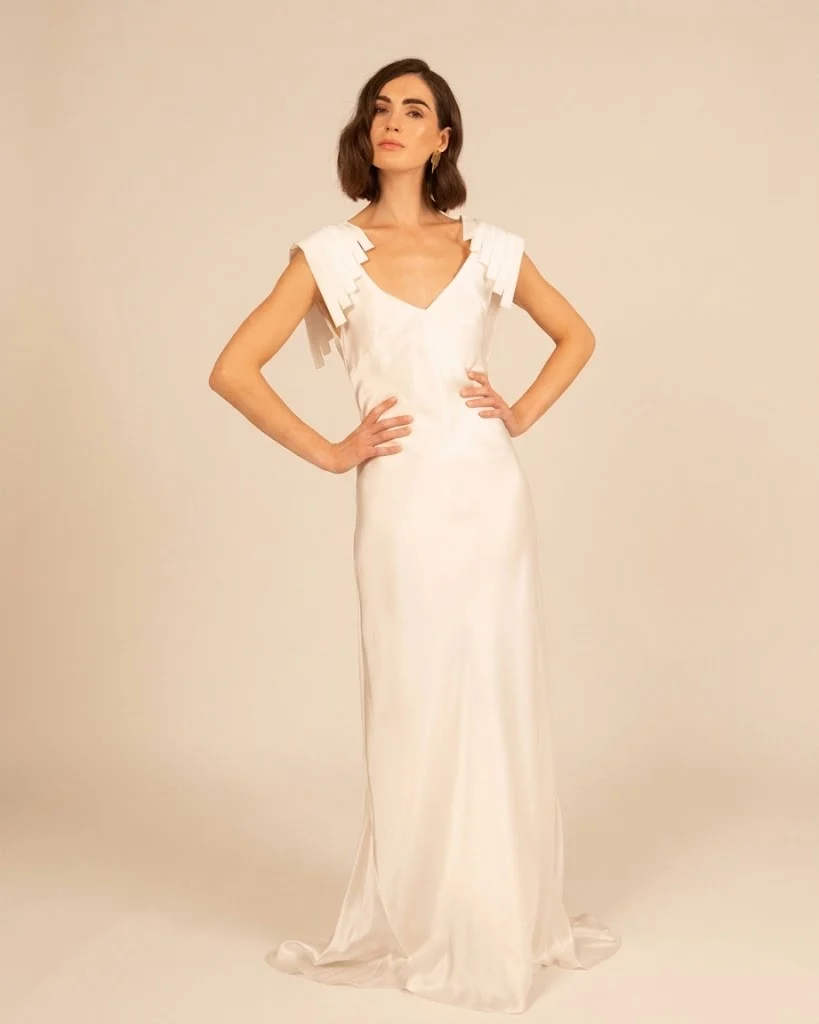
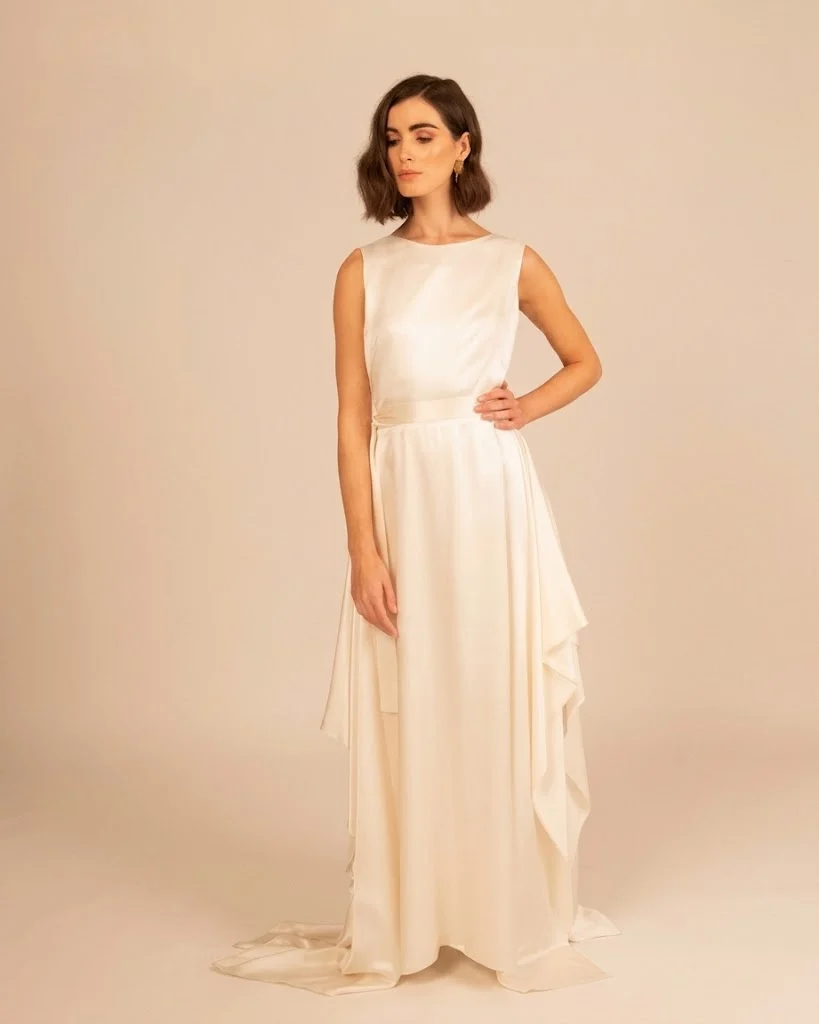
Fabric does half the work
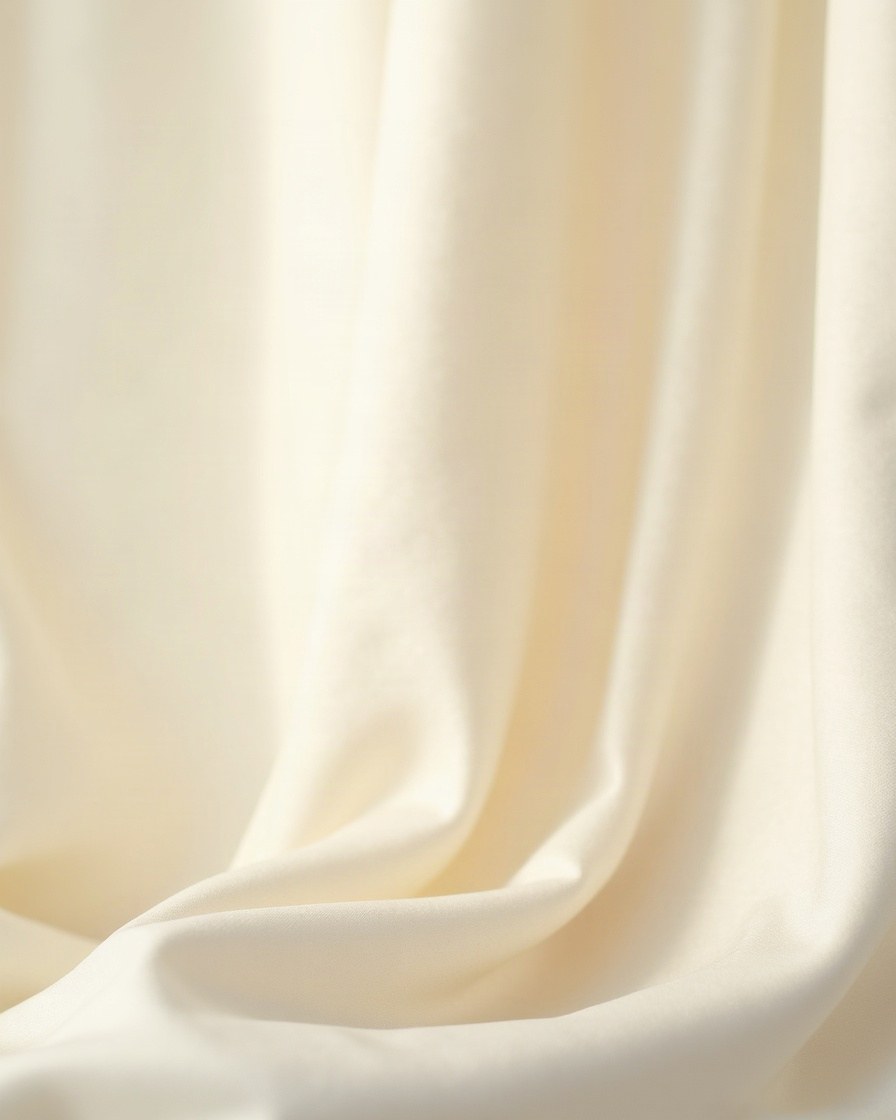
In a simple design there is no lace or embroidery to draw the eye. What remains is the fabric and the cut. That is why exactly the same design can take on a completely different character depending on the drape, texture and quality of the fabric and the way it is made, without anything changing in the line. Fabric is not a last-minute choice, it is part of the design.
Natural silk has weight and drape. It does not puff up or stand stiff, and it has a sheen that never shouts. As a natural fibre it absorbs moisture, which matters on a warm day. Up close, guests will see how the dress creases when you sit, how it catches the light when you turn, and how it moves. We look at the difference in detail in silk or satin for your wedding dress.
Fit works the same way. A dress in a standard size falls differently from a dress cut to your own measurements, and the difference shows at the shoulders, the waist and the back, where no size fits everyone. The less a dress has on it, the more it is judged by its line.
Summer and winter
For a summer wedding, choosing the dress is a balance between the look and comfort. Light fabrics and lines that let the body move naturally create an image that expresses you, without limiting your freedom.
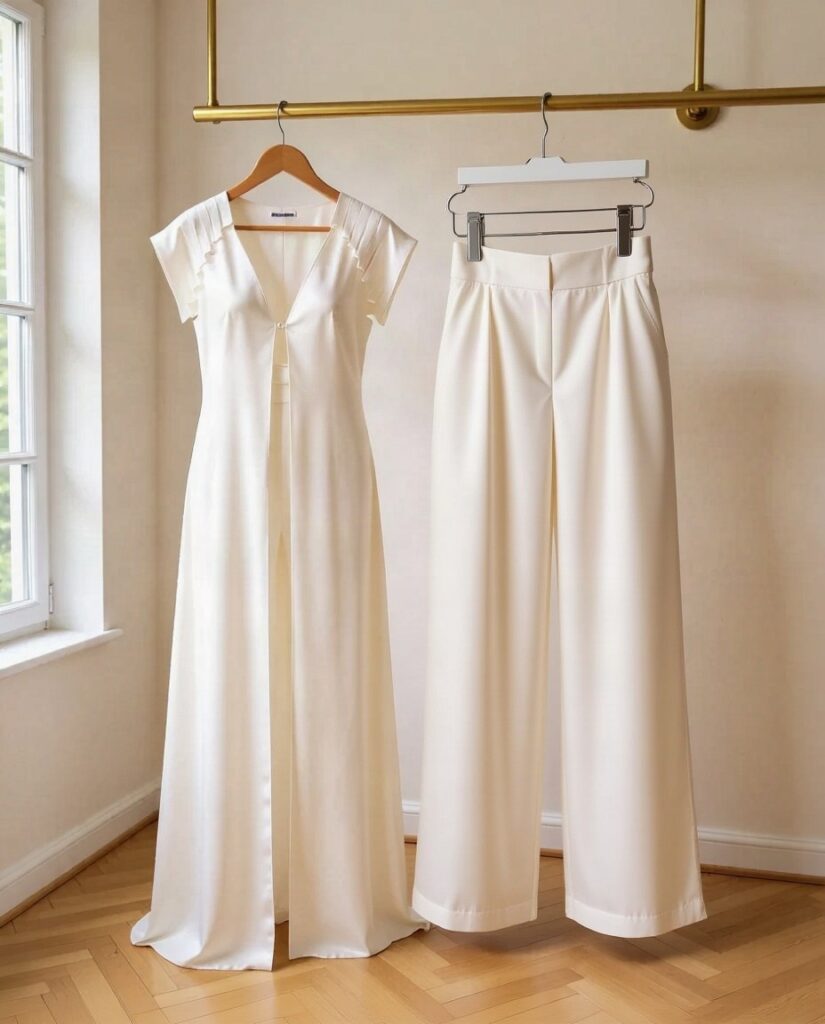
In winter, the same approach can take on a different dimension. The same line can take a long sleeve or be paired with a complementary piece. A designed second piece, such as a silk vest or a kimono, is not just an extra layer for warmth: it strengthens the design identity of the dress, adds another layer of interest to the silhouette and creates a more unexpected, complete and striking look.
A good example is the ATHENA silk bridal kimono. Worn with the dress, it creates a single, richer look. Taken off, it reveals a different version of the same outfit, like having two wedding dresses in one. This change makes the second piece a particularly interesting choice for a winter wedding, combining warmth with the chance to transform your look within the same day.
Dress or separates?
Separates are gaining ground at civil weddings. A silk skirt with a top, or trousers with a vest, gives you two possibilities: you can change during the day, and you can wear each design again after the wedding.
The HELENE top, for example, ties at the neck and pairs with the SELINI skirt or the ARTEMIS trousers. After the wedding, the same top works with trousers or a skirt you already own.
Trousers work particularly well at a city hall wedding. They are practical on steps and in cars, they photograph with a clean line, and with a silk top they look intentional rather than casual. A long dress with a train is worn again less often. If wearing it again matters to you, separates give you more options. They are made to your own measurements, just like the dresses.
A few things worth checking
Sit down in it before you say yes. At a fitting everyone stands. On the day you sit at the registry office, in the car, at the table. It is worth seeing how the dress behaves when you sit too.
See it in natural light. Artificial light changes tones. The same fabric in daylight can show a different shade.
Think about signing. At a civil ceremony you usually sign the register at a desk. Check that sleeves, straps and neckline stay in place when you lean forward.
Plan the hours after. A courthouse wedding is short, but the day rarely is. Choose something you will still enjoy wearing at six in the evening.
The simplest test
On your wedding day, it is worth feeling completely yourself, in your most special version. Shining not because you are wearing something unlike you, but because you chose a wedding dress that brings out your personality, flatters your silhouette and expresses your personal style. You do not need to follow an image that does not represent you. Your dress should bring out who you are, so that you feel beautiful, natural and confident.
We will help you find the right design for you. Look through the civil wedding dresses and note two or three lines that draw you in. At the first appointment, which is private, you will try on different lines and together we will decide which dress flatters you most.
Every Lefkon piece is handmade in Greece in 100% Greek silk from Soufli and cut to your own measurements. The atelier is in Patras, appointments can also be arranged in Athens, and the first conversation can happen online, wherever you are. Book a private appointment.
Frequently asked questions
Can I wear a wedding dress to a civil ceremony?
Of course. There is no rule that forbids it or requires it. A wedding dress, long or short, simple or more formal, suits a civil wedding when it expresses you. The venue and the hour help with the details, not with the decision.
Is a short wedding dress right for a civil wedding?
Yes, if it is the line that expresses you. A short wedding dress feels light and leaves you free to move, and when it is designed with care for proportion and fabric, it can have just as formal a presence as a longer one.
Does a wedding dress with sleeves suit a civil wedding?
It does. A sleeve keeps you warm in colder months, gives a more formal feel and photographs cleanly up close. A line from the collection can take a sleeve without losing its identity.
Can a romantic wedding dress suit a civil ceremony?
Yes. Romantic does not have to mean volume or lace. In a silk wedding dress, the feeling comes from the movement of the fabric, an open back or a soft sleeve.
What should I wear as a bride to a civil wedding in winter?
In winter, the same line can take a long sleeve or be paired with a second design, such as a silk vest or a kimono. The second design keeps you warm and adds interest to the silhouette, and when you take it off, your look changes within the same day.
FURTHER READING
ALL ARTICLES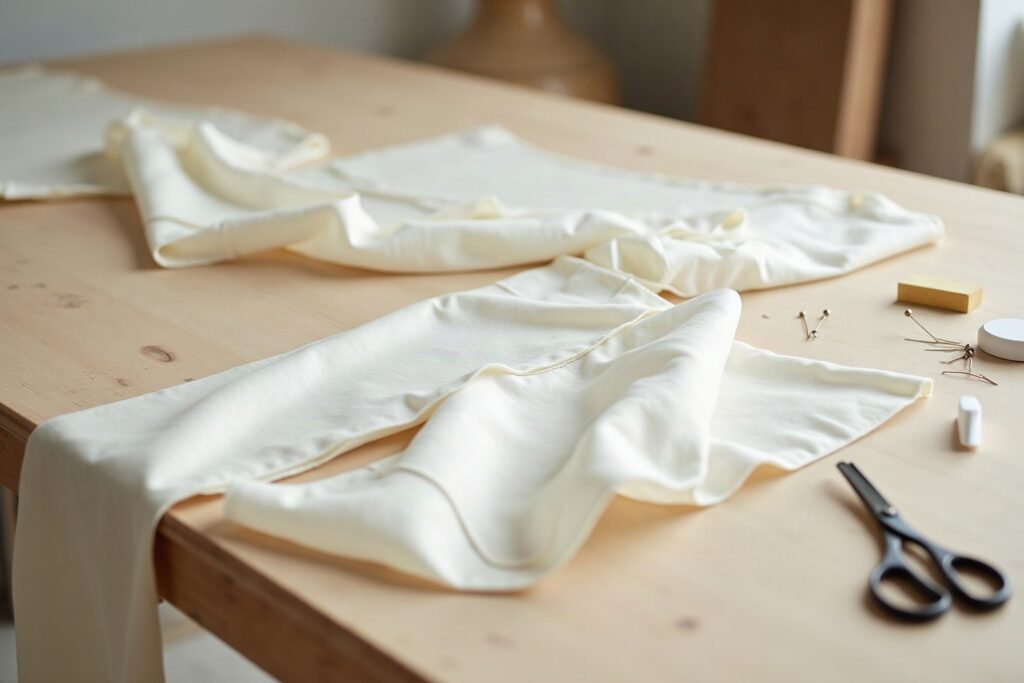
How Is a Handmade Wedding Dress Different from a Ready-Made Dress?
What handmade really means in a wedding dress, how it differs from a dress produced in standard sizes, and where the difference shows: fit, fabric and finish.
READ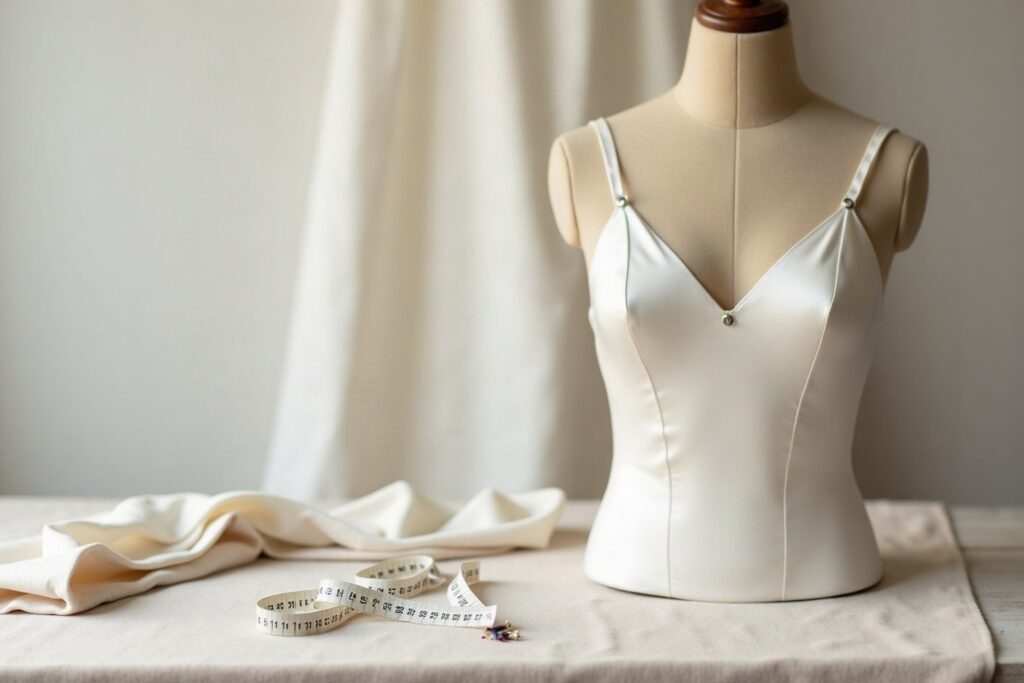
What Makes a Wedding Dress Couture?
Couture is a word used freely in bridal fashion. Where it comes from, what it means in practice and how a couture wedding dress is designed, cut and finished.
READ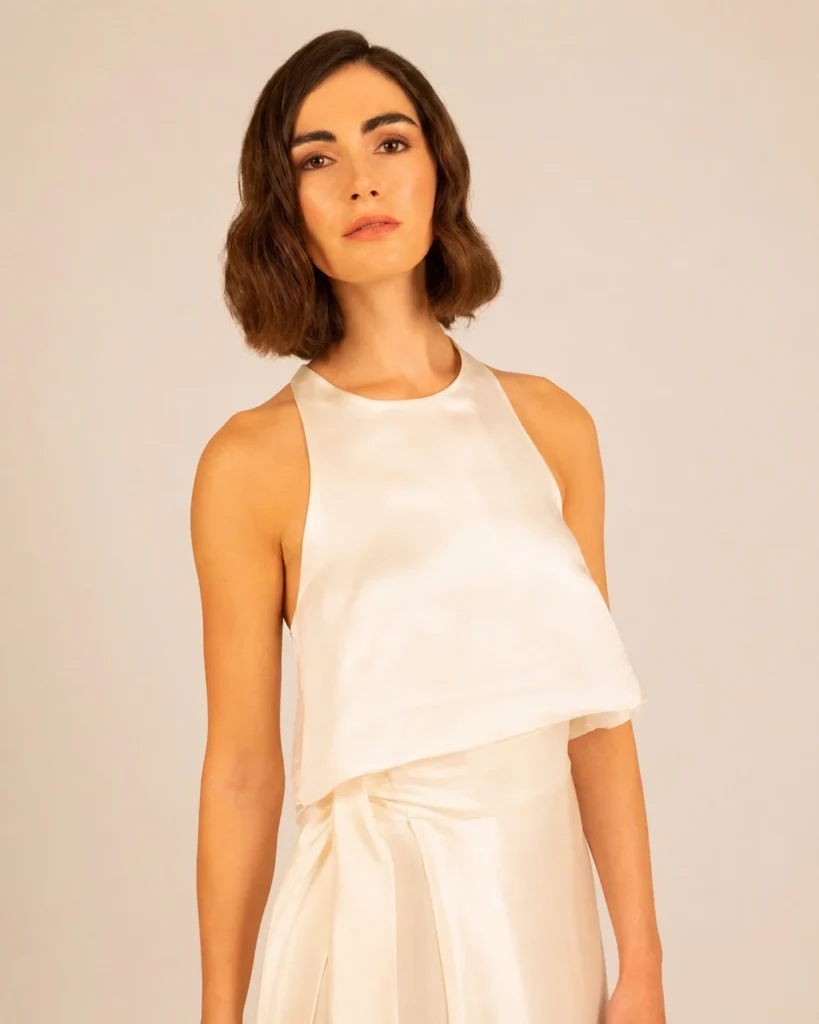
What Makes a Wedding Dress Truly Unique?
What makes a wedding dress truly unique: silhouette, proportion, fabric, movement, construction and a design that begins with the woman who wears it.
READPRIVATE APPOINTMENT
Let us make it to your measurements
Leave your details and we will contact you to arrange an appointment at the atelier. No time limit and no obligation.